Wake up to windows covered in water? You’re certainly not alone.
Condensation is a common problem in Cornwall, particularly as the weather gets cooler and we start keeping windows closed.
Our damp climate doesn’t help, but the water on the inside of your windows usually comes from moisture already inside your home.
Cooking, showering, drying washing and even breathing all add moisture to the air. When that warm, moist air hits a cold window, it cools and forms water droplets. (GOV.UK)
So what can you actually do about it?
1. Let the Moist Air Out
Ventilation is one of the simplest ways to reduce condensation.
If your windows have trickle vents, keep them open and unobstructed. Government ventilation guidance recommends leaving them open even during winter. (GOV.UK)
Opening windows periodically can also help exchange damp indoor air for fresh air.
You don’t necessarily need to have every window wide open all day. The important thing is giving moisture somewhere to escape.
2. Use Your Extractor Fans
Bathrooms and kitchens can produce a surprising amount of moisture.
Use the extractor fan when showering, bathing or cooking, and keep it clean so it can actually do its job. Cornwall Council specifically recommends extractor fans in kitchens and bathrooms to remove steam. (Cornwall Council)
Closing the bathroom or kitchen door while producing lots of steam can also help stop that moisture spreading throughout the house. (GOV.UK)
3. Be Careful Drying Washing Indoors
This can be a big one.
All that water that disappears from your wet washing has to go somewhere.
Ideally, dry clothes outside when the Cornish weather allows it. Admittedly, that sentence may raise a few eyebrows around January. 😄
If you have to dry clothes indoors, ventilate the room well or consider using a dehumidifier. (Cornwall Council)
4. Keep the House Reasonably Warm
Cold surfaces encourage condensation.
Cornwall Council advises that maintaining a lower, steady temperature can be more effective for controlling condensation and mould than allowing a property to become very cold and then heating it for short periods. (Cornwall Council)
Obviously, heating costs money, so we’re not suggesting turning the house into a tropical greenhouse.
The principle is simply to avoid very cold walls and windows wherever reasonably possible.
5. Don’t Forget Behind the Furniture
Found mould hiding behind a wardrobe or sofa?
Poor air circulation can create cold, damp pockets behind large pieces of furniture.
Where possible, leave a little space between furniture and external walls so air can circulate. This is also included in current government damp and mould guidance. (GOV.UK)
Not sure how humid your home actually is? A small digital humidity meter can help you keep an eye on indoor humidity levels. (Amazon affiliate link) This type of inexpensive meter shows both temperature and relative humidity at a glance.
6. Would a Dehumidifier Help?
A dehumidifier can remove moisture from the air and can be particularly useful where drying clothes indoors is unavoidable.
But remember that it’s treating the moisture in the air, not repairing a leaking roof, broken gutter or other building defect.
And that’s an important distinction.
Is It Really Condensation?
Water on the inside of windows in the morning is often condensation.
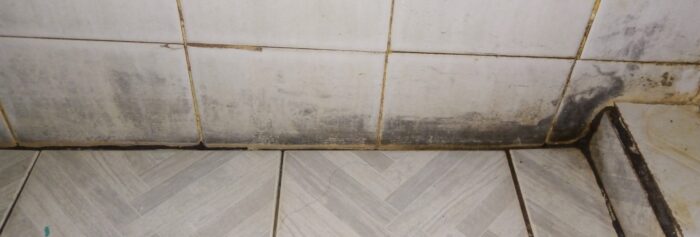
But persistent damp patches, peeling wallpaper, water ingress, musty smells or damp appearing in particular areas could indicate something else.
Broken roof tiles, leaking gutters, cracked render, faulty window seals and other defects can all allow water into a property. (Cornwall Council)
So don’t automatically assume every damp problem is condensation.
The Cornwall Home & Garden Tip
Start with the simple things:
Ventilate, extract steam, control indoor moisture and keep the house reasonably warm.
And if you’ve wiped the windows, opened the trickle vents and done everything right but you’re still getting serious damp or mould, start looking for another cause rather than endlessly blaming condensation.
We’ve also written about the wider problem here:
👉 Why Does Cornwall Get So Damp?
Do you have a condensation problem in your Cornwall home? What has worked for you? Let us know in the comments. 👇
Ken @ Cornwall Home & Garden 🏡🌿
Discover more from Cornwall Home & Garden
Subscribe to get the latest posts sent to your email.